Locations
Forth River Slalom Course
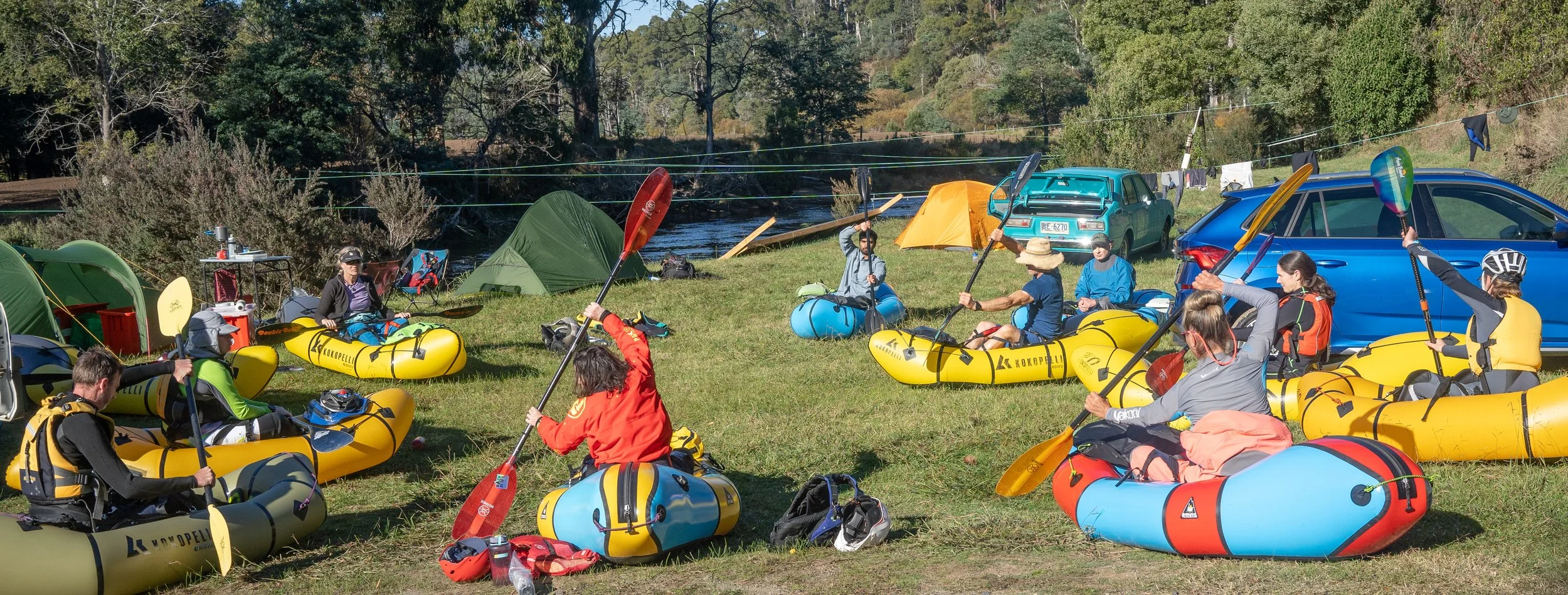
The Forth River Slalom Course is an excellent teaching venue with numerous grade 2 river features. It is one of the best teaching sites in Australia and can be used for paddling courses from beginner to advanced. It has toilets and beautiful camping ($10 p.p.p. night) beside the Forth. It is a 17 minute drive to Ulverston (closest large supermarket, full shops, etc), 8 minutes to a corner shop, service station and the Forth Pub and approximately 20 minutes to Devonport. The camping cost is covered by Packrafting Tasmania for any nights within a course. Note that there is a locked gate to access the site.
Mersey River Slalom Course
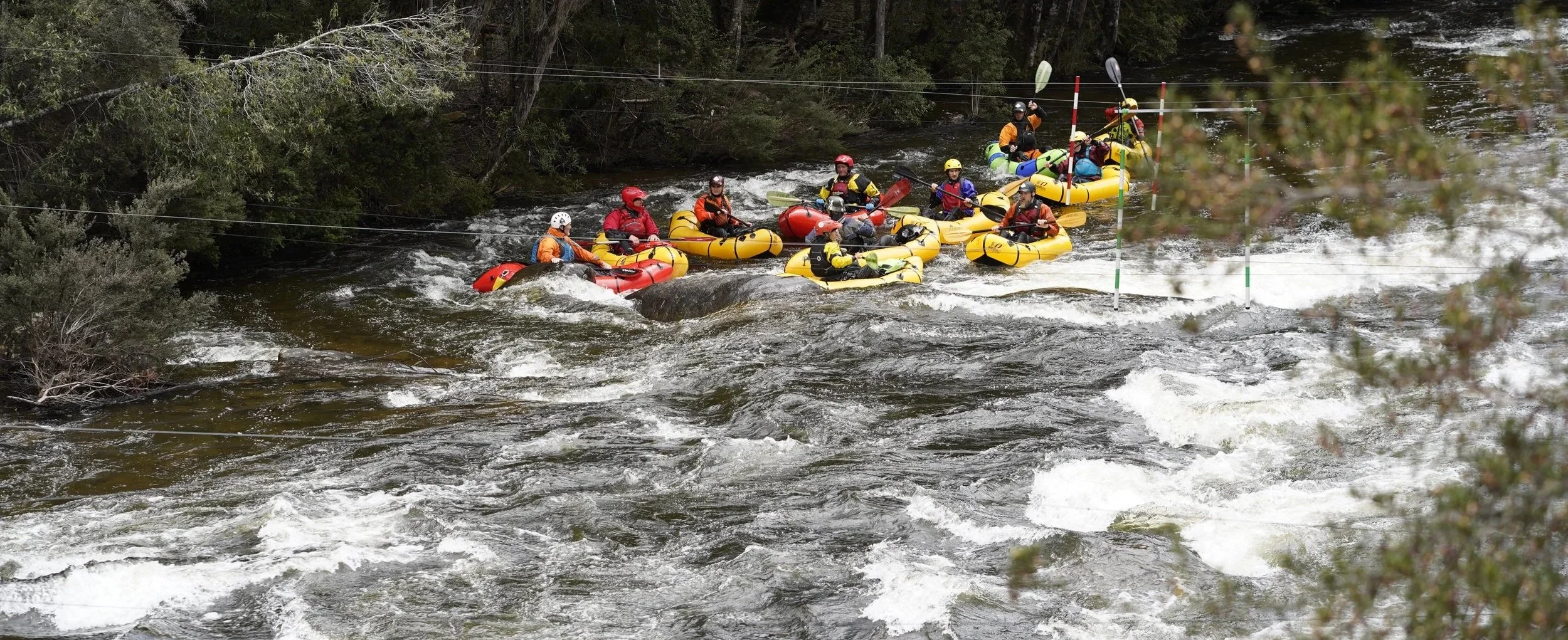
The Mersey River Slalom Course provides numerous grade 2+ river features that are excellent for teaching intermediate to advanced paddlers. It is relatively continuous and often the water and conditions can be relatively cold as it is situated in a steep valley between mountains. The slalom course day area includes basic drop toilets plus picnic tables & a public shelter. It is another 600 metres further upstream to a track that heads down to the Berlin Wall rapid campsite. The venue is a 35 minute drive from Mole Creek (closest small shop) and just under an hour from Deloraine (closest main supermarket). If coming from interstate most participants will fly into Launceston.
Lea River
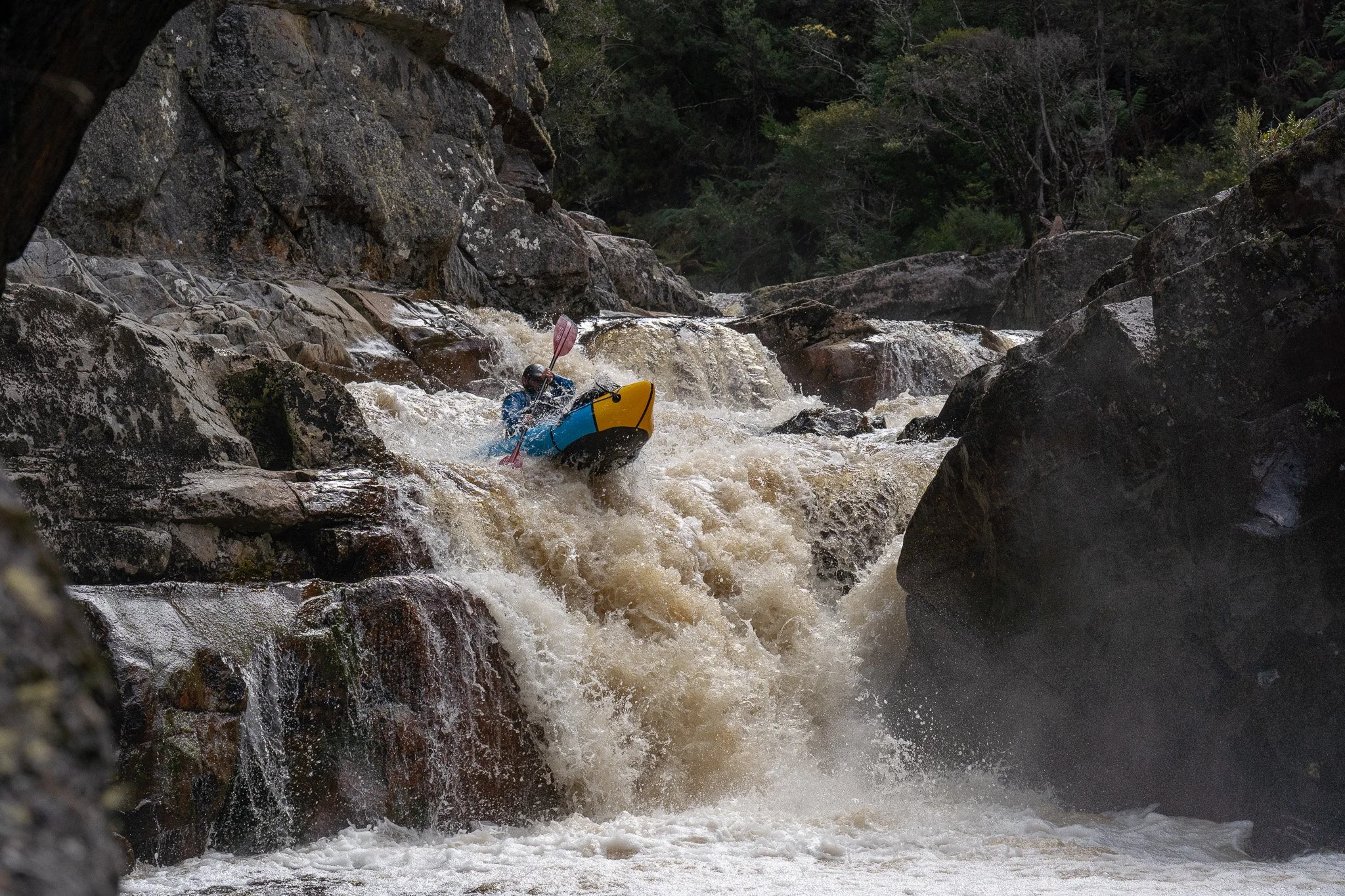
The Lea River is a favourite amongst whitewater enthusiasts in Tasmania, and for good reason. It is an incredibly atmospheric and picturesque steep creek that is well known for its many drops and steep rapids. It is used for Tasmania’s major extreme kayak race every September and is one of the best rivers in Australia to learn steep creeking techniques. Despite it’s intimidating steepness it is an ideal venue, at the right level, for aspiring advanced paddlers. Note that if either river levels or the group are unsuitable we will not be able to use this section of river.
North Esk
The North Esk is fantastic grade 3/3+/4 river only 15 minutes south east of Launceston. At the right levels it provides excellent opportunities for paddlers to progress their paddling towards advanced skills. Harder rapids can be portaged whilst a wide range of rapids provide participants the opportunity to practice a variety of advanced techniques.
Derwent River (Broken Bridge)
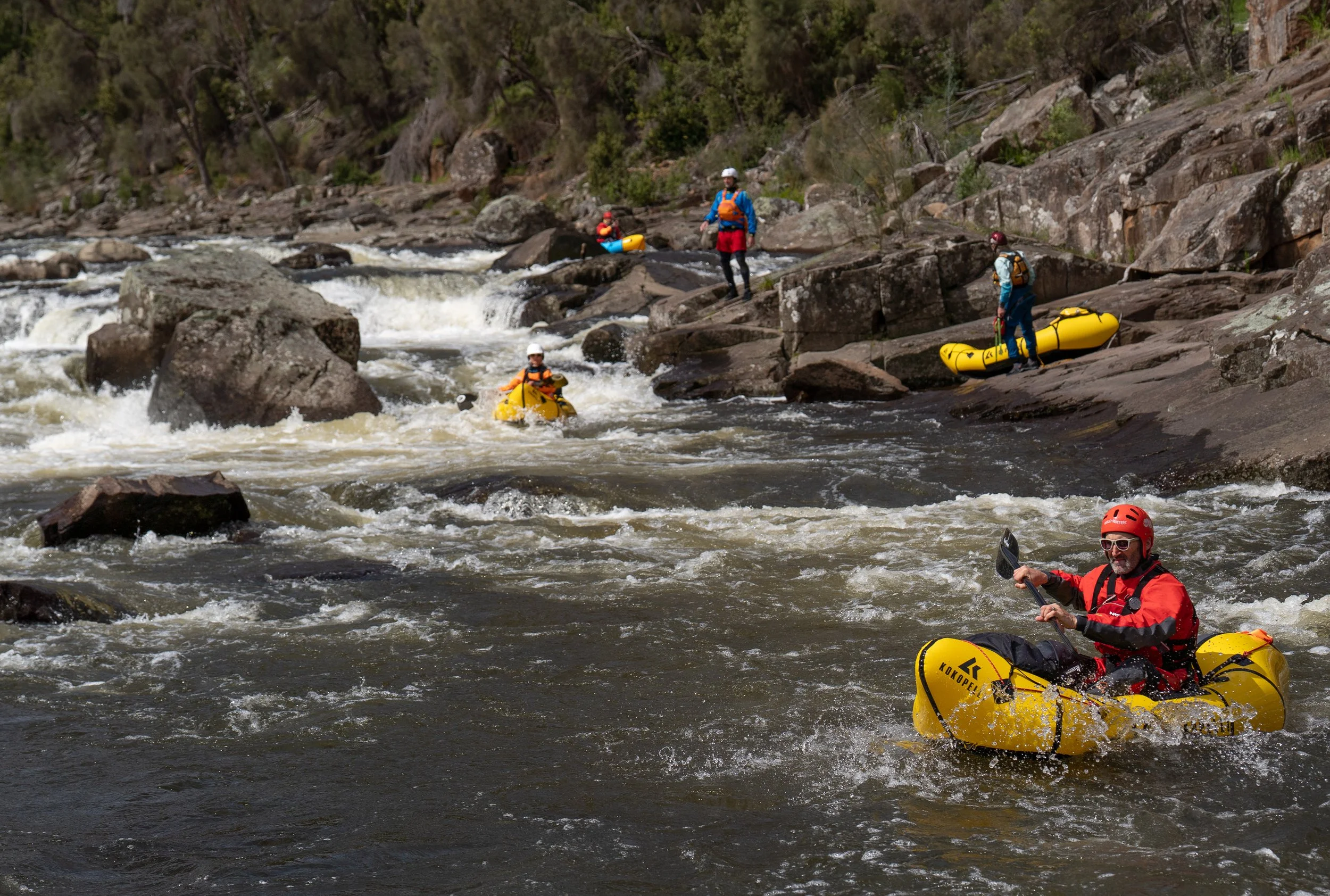
The Derwent flows from the central highlands all the way south and out to the ocean past Hobart. About 40 minutes drive north west of Hobart and 7 minutes drive north west of New Norfolk (on the A10) is the Broken Bridge rapid. Here there is a small slalom course and some powerful currents on offer. Watch out for the small dirt access to the parking area as it comes up very quickly on a corner of the A10.
Plenty Railway Bridge (Derwent River)
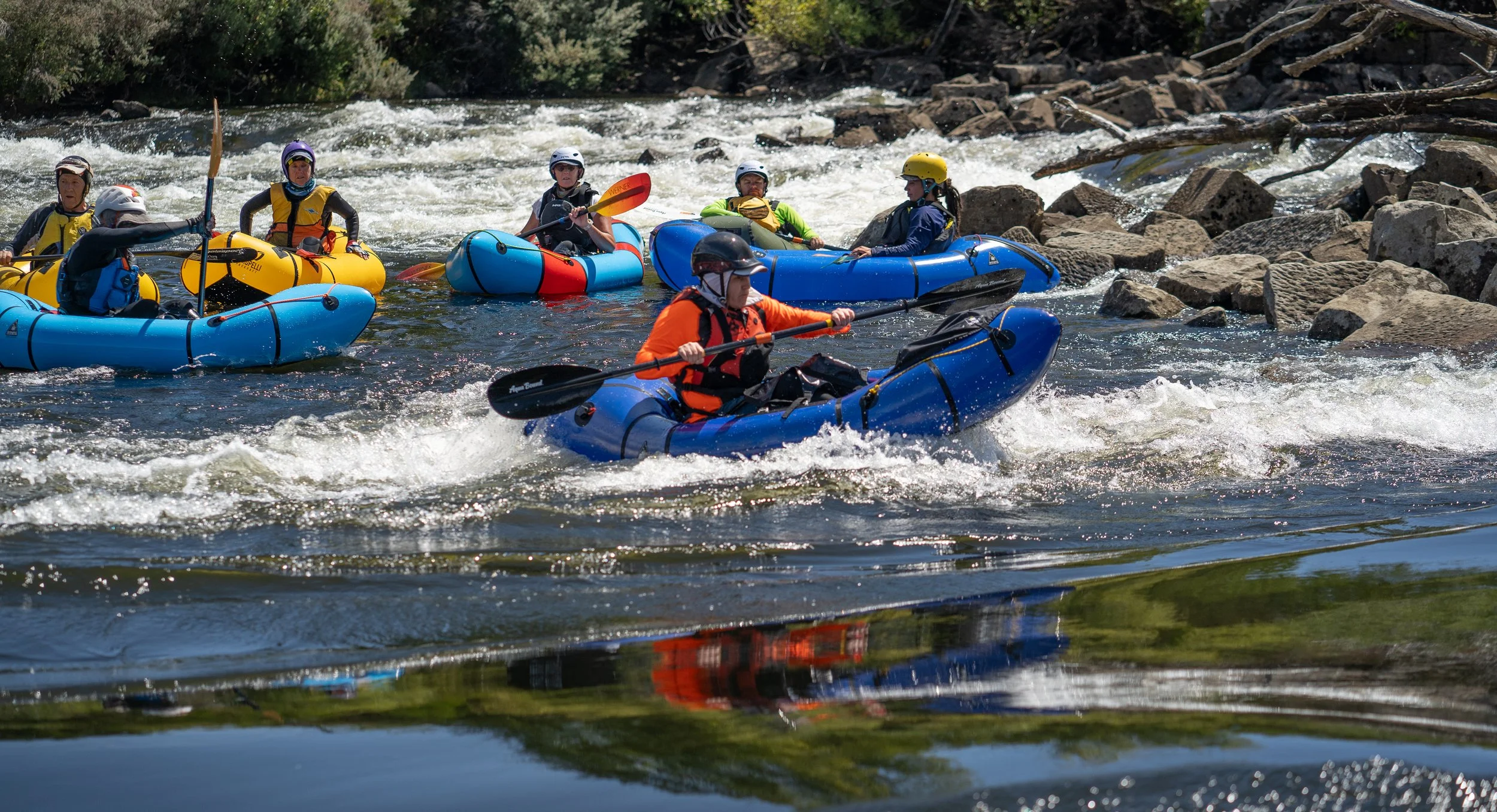
The Plenty Railway Bridge rapids provide a number of fast currents, strong eddylines and a number of large waves. It is a great venue for learning and practicing paddling, whitewater swimming and river rescue techniques. It is a 5 minute drive upstream of New Norfolk, on the western side and approximately 40 minutes north east of Hobart.
North East Victoria (Mitta Mitta River)
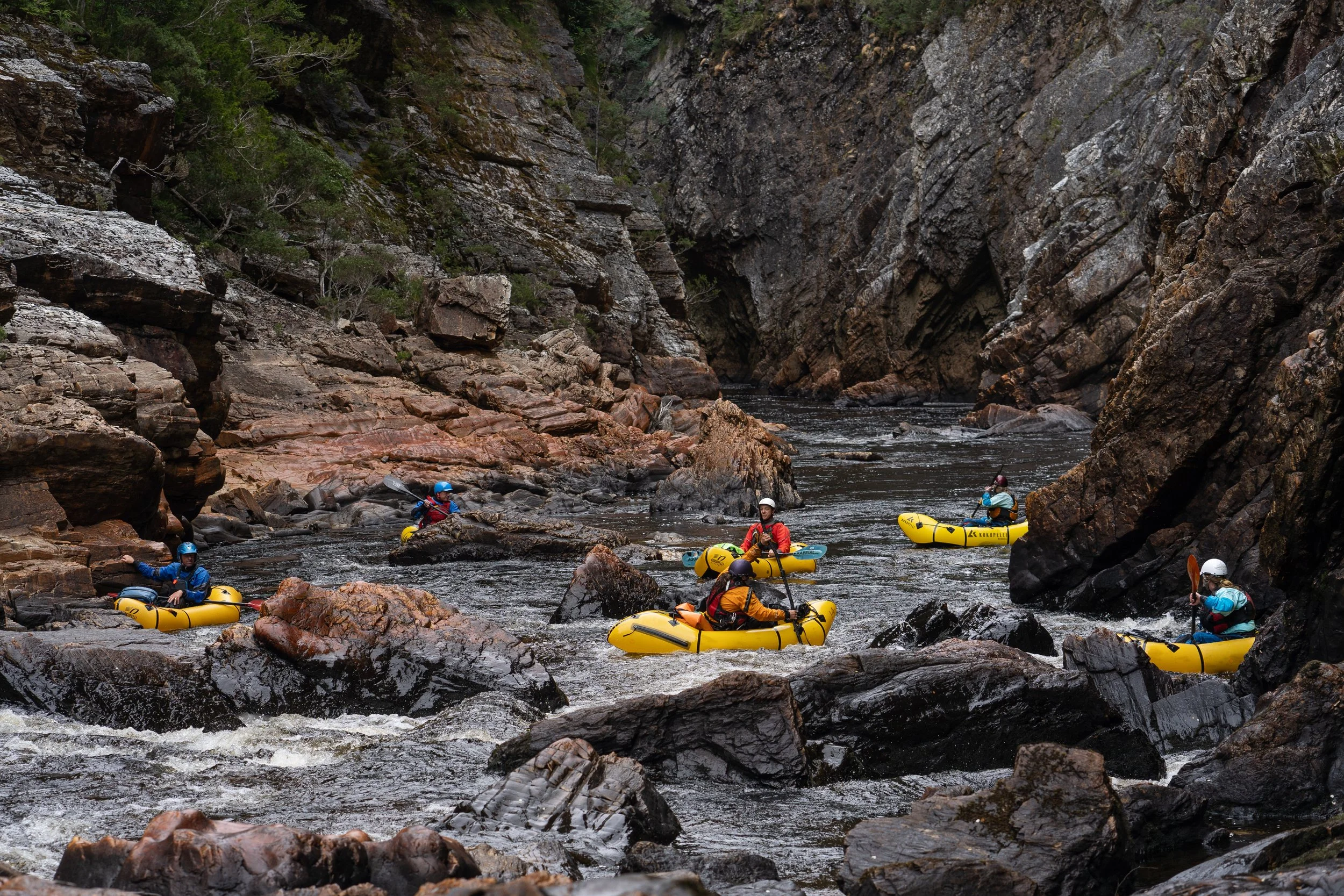
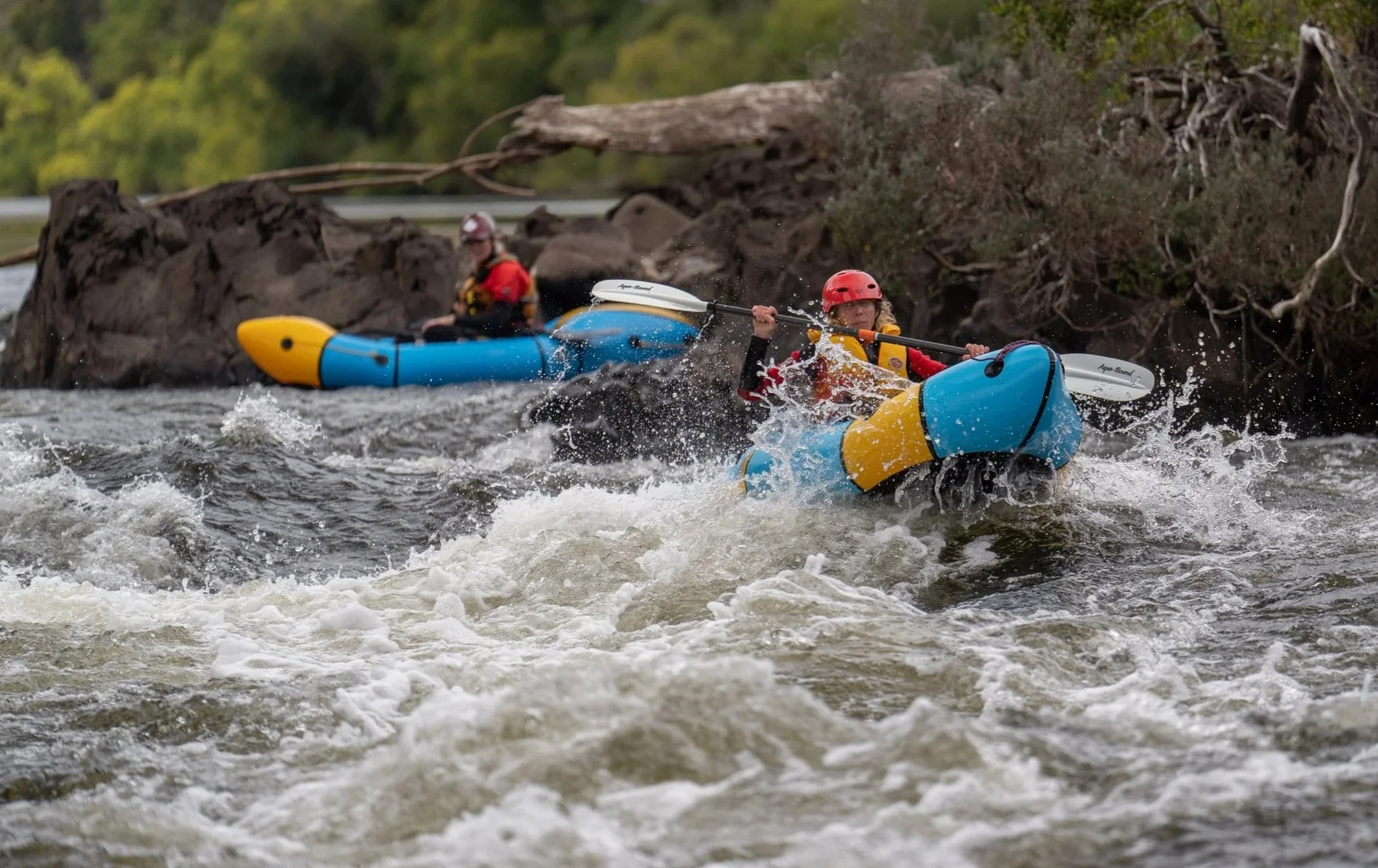
At times Packrafting Tasmania will run courses in north east Victoria on the renowned Mitta Mitta River. We base ourselves out of the Jokers Flat Campground right beside the Mitta. This allows us to make use of a number of excellent sections of whitewater. These sections are perfect for intermediate paddlers looking to step up their paddling. The campground has basic toilet facilities along with fireplaces and some picnic tables.
Franklin River (South West Tasmania)
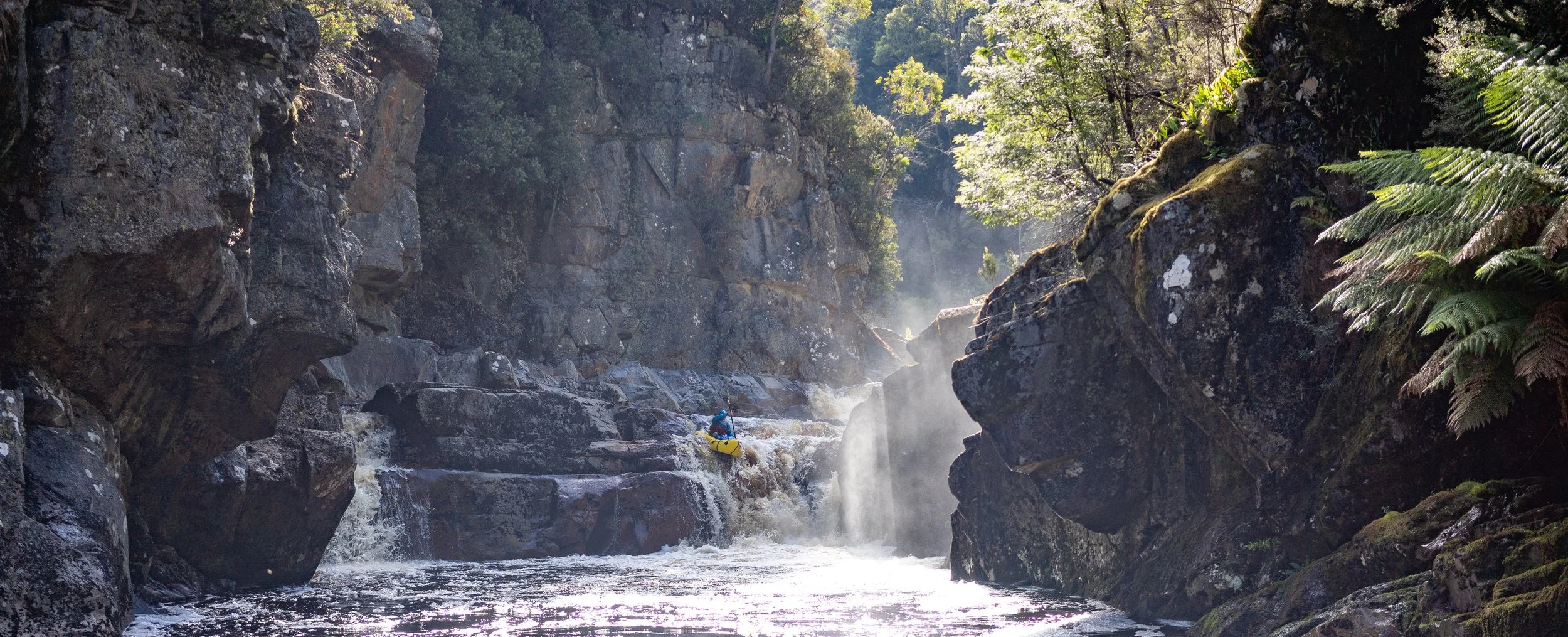
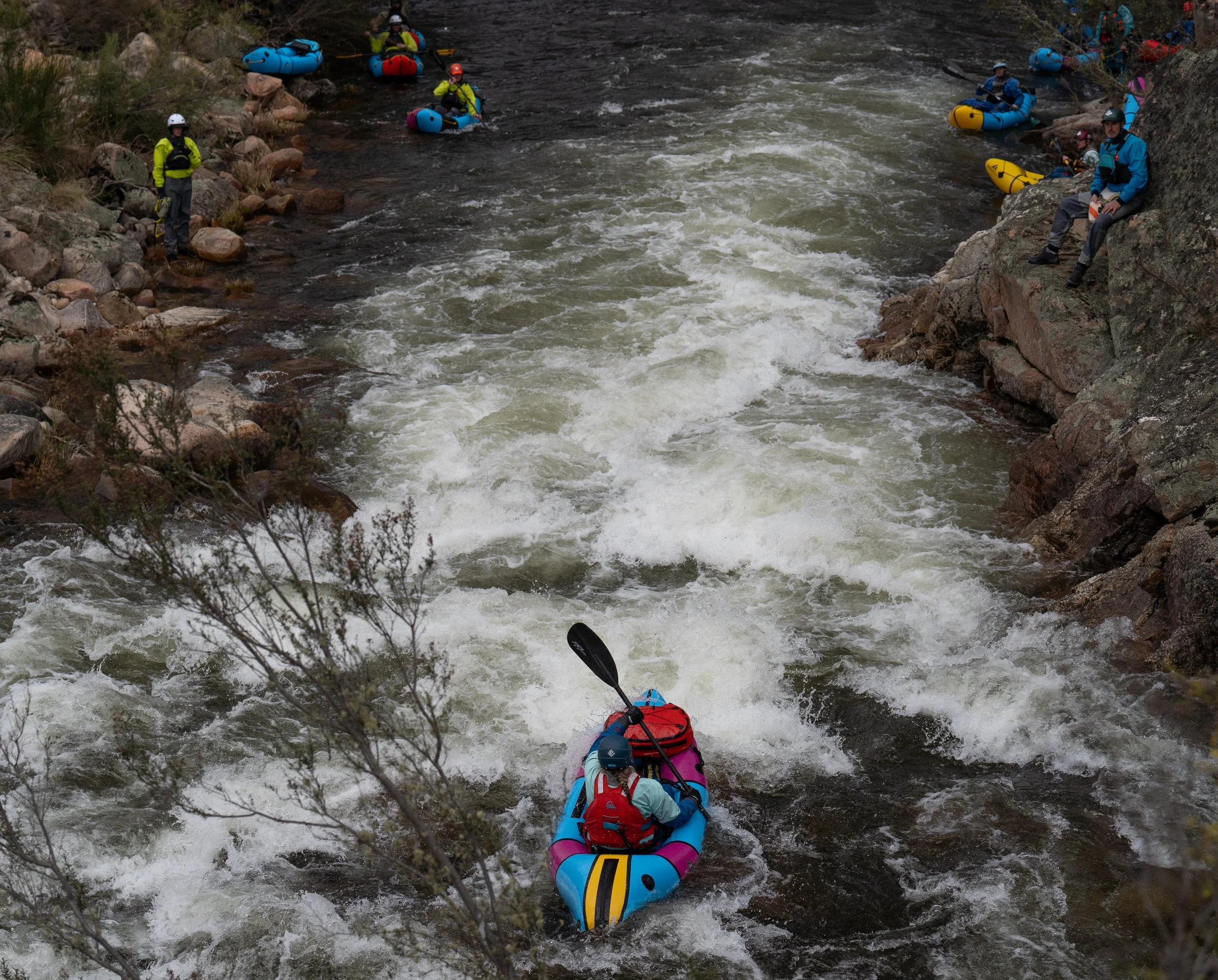
Packrafting Tasmania is in the process of signing off on a permit to deliver a 9-day river running course that sees participants tackling the mighty, world-heritage Franklin River. This journey is world-renowned and has been called one of the top 10 multi-day rafting trips in the world. The trip starts at the Collingwood River Bridge on the Lyell Hwy and finishes on the Gordon River. The river includes numerous challenging sections and portages. Note that sections of the river are dangerous in high water so instructors may need to alter or even cancel the trip in certain situations.